Assault rifle recoil is one of, if not THE, hardest skills to learn in PUBG. Due to its completely random and unpredictable nature, there is no universal answer for how to control recoil, other than time and practice. In this guide, we're going to go over all there is to know about AR recoil, so that by the end you'll have all the tools and knowledge necessary to master PUBG's most robust weapon class.
Sensitivity
We couldn't talk about recoil control without discussing sensitivity. I'm a firm believer that there is no single universal sensitivity setting that is perfect for everybody. Rather than duplicate that whole topic here, I'd highly recommend checking out my separate guide on how to find your best sensitivity settings in PUBG (linked in the video description).
As you work through the tips below, I'd recommend practicing with the 2-3 ARs you feel most comfortable with. You may not get your ideal loadout in a match, so having backup loadouts you've actually practiced with is really helpful and makes you a more rounded player.
Vertical Recoil
Every AR in PUBG has its own distinct vertical climb speed, which affects how much recoil it has and requires a different level of muscle memory for how fast you pull your mouse down.
For example, I did a quick spray of all fully-auto ARs with no grip or muzzle attachments, then compared them side by side. The Beryl, ACE, and AUG all had the highest level of natural vertical recoil, while the G36, SCAR, and K2 have the lowest levels of vertical climb.
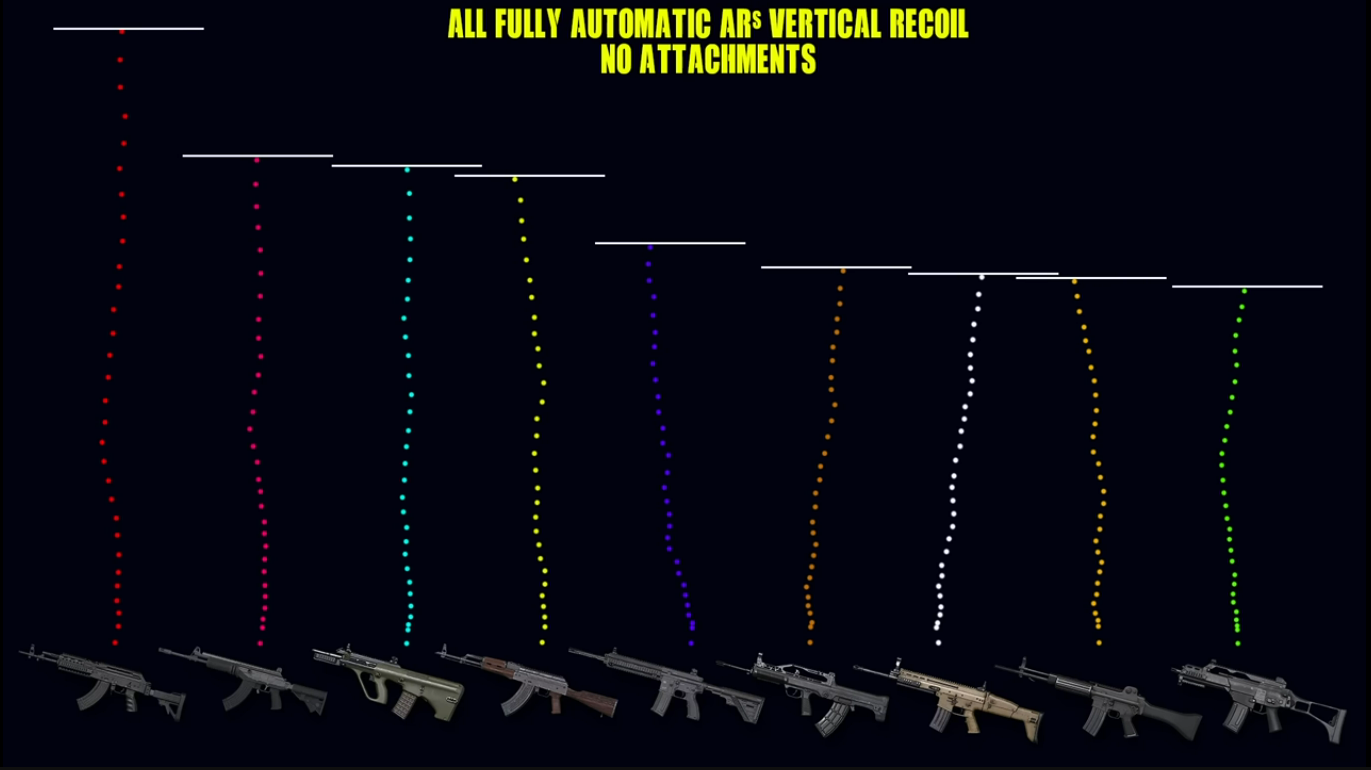
I'd heavily suggest finding 2-3 ARs you feel most comfortable with and strictly using those when practicing the tips in this guide. Some good starter ARs would be the M416, SCAR, or G36, as they tend to have decent damage output and stability. Then work your way up to higher-skill ARs like the AUG or Beryl once you become more confident.
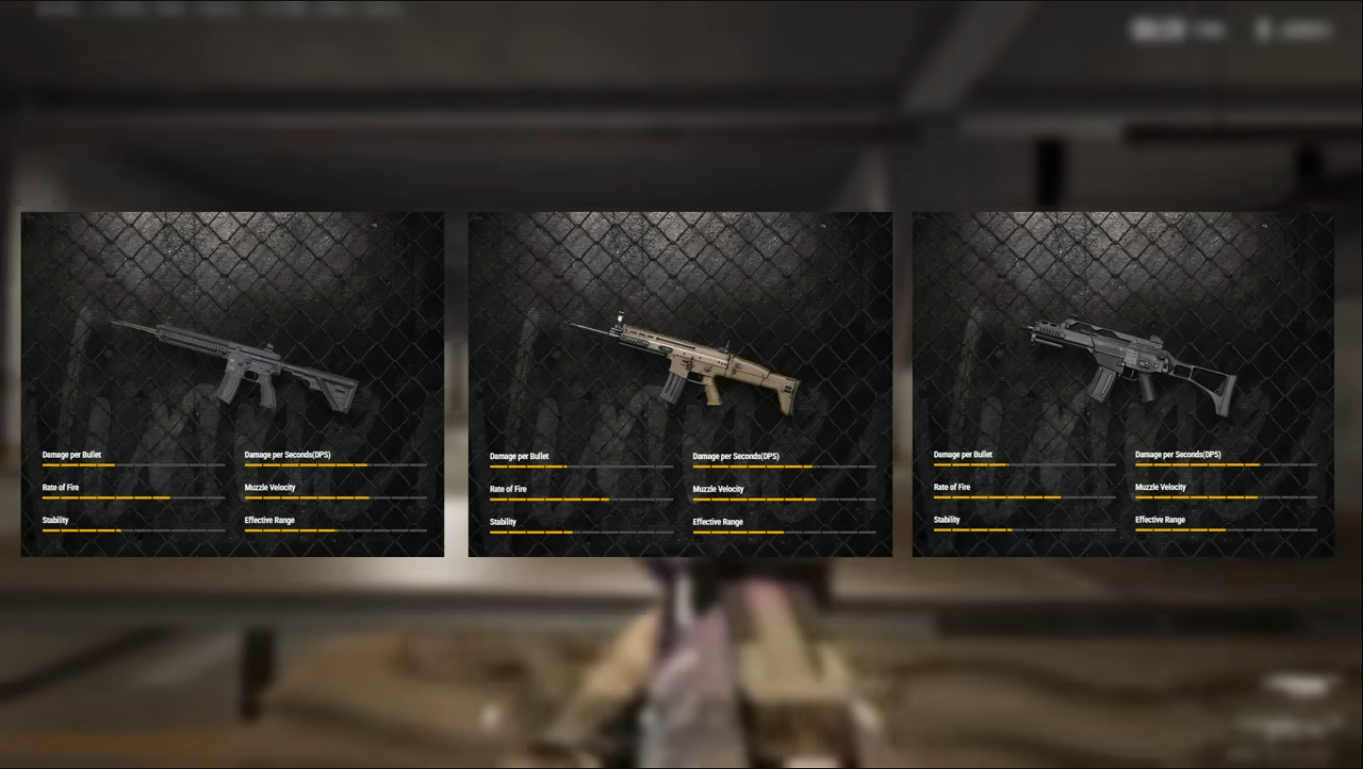
If you want to review this comparison again, I keep it in the "recoil patterns" section of my Discord, which you can find in the video's description.
Compared to horizontal recoil, vertical recoil is actually a lot easier to handle, since the main thing you need to do is pull your mouse down. The faster an AR's vertical climb speed, the faster you'll need to pull down to compensate.
The First-to-Second Shot Jump
The one thing I see trip up a lot of newer players is that initial jump from the first to the second bullet. The first-to-second shot has the greatest gap in vertical climb, while the rest of the bullets follow a very close and repetitive pattern. There are two ways to handle this initial shot recoil: a beginner version and a more advanced version.
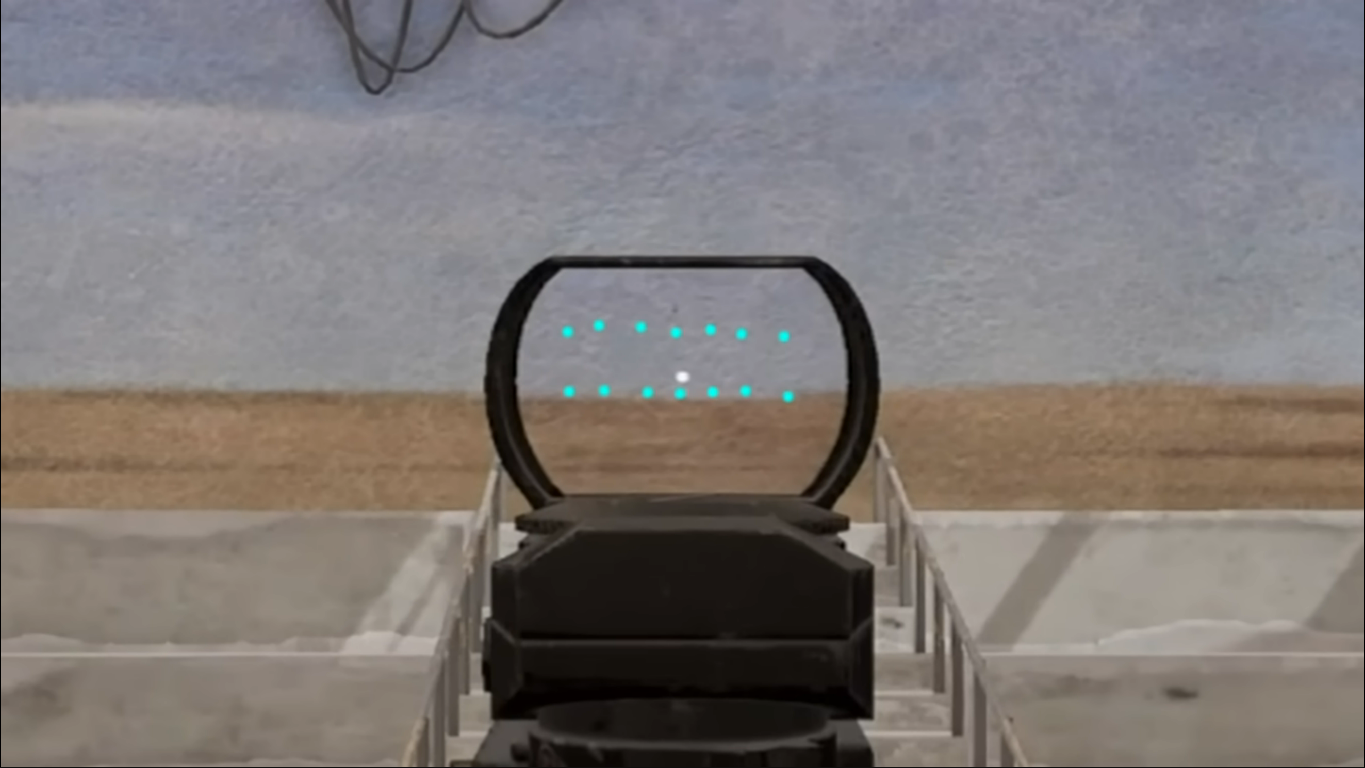
1. Let the jump happen, then pull down smoothly. The more beginner-friendly approach is to not even worry about that first-to-second bullet jump. Aim your red dot center mass, fire, and only worry about controlling the remaining bullets. Start by practicing this in bursts, then gradually work your way up to longer sprays.
2. Pull down fast to compensate for the initial jump. The more advanced version requires you to move your mouse at two different speeds within the same burst or spray. Because that first-to-second shot has the bigger gap, it requires an incredibly quick pull down, followed by a slower, more regulated pull. Just like the beginner version, start with short, controlled bursts and really focus on that initial jump followed by a smooth pull down. You'll know you're doing it right when you have consistently tight groupings on every burst. Once you feel confident, slowly work your way toward longer sprays.
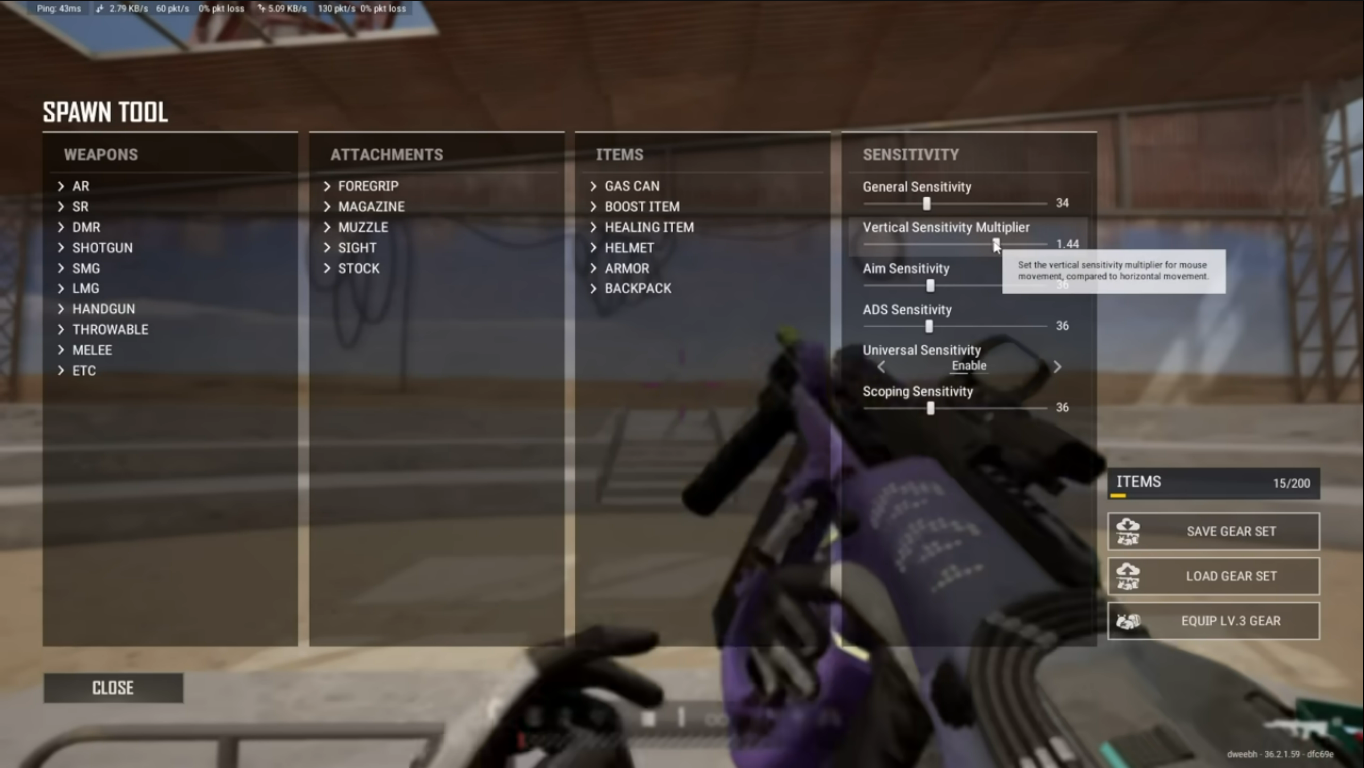
If you still find the gun climbing no matter how much you pull down, try increasing your vertical sensitivity multiplier to something that feels comfortable. As you keep practicing, though, the goal should be to get that vertical multiplier as low as you can, since lower sensitivity settings tend to lead to more consistent spray control.
Crouching vs Standing
There is a big difference in vertical recoil between crouching and standing. While it's always ideal to shoot from the crouch position, you'll often find yourself shooting over a hill, out of a window, over a car, or from behind any cover where you have to stand. So as you practice vertical recoil, I'd heavily suggest doing it from both the crouch and standing positions, that way you're ready for any encounter in a match.
Horizontal Recoil
Horizontal recoil on assault rifles is completely random and is quite frankly the hardest aspect of shooting these guns. Aside from any help you get from foregrip and muzzle attachments, there are really only two ways to control it.
1. Micro-Adjustments (the hard way)
The harder of the two is making micro-adjustments. This takes an insane number of hours to practice and really only comes with experience and a lot of patience. In short, as you do your vertical pull down, whichever way the gun starts to drift, left or right, you have to instinctively counter it as you keep pulling down, almost making a snake-like pattern with your mouse as you spray.
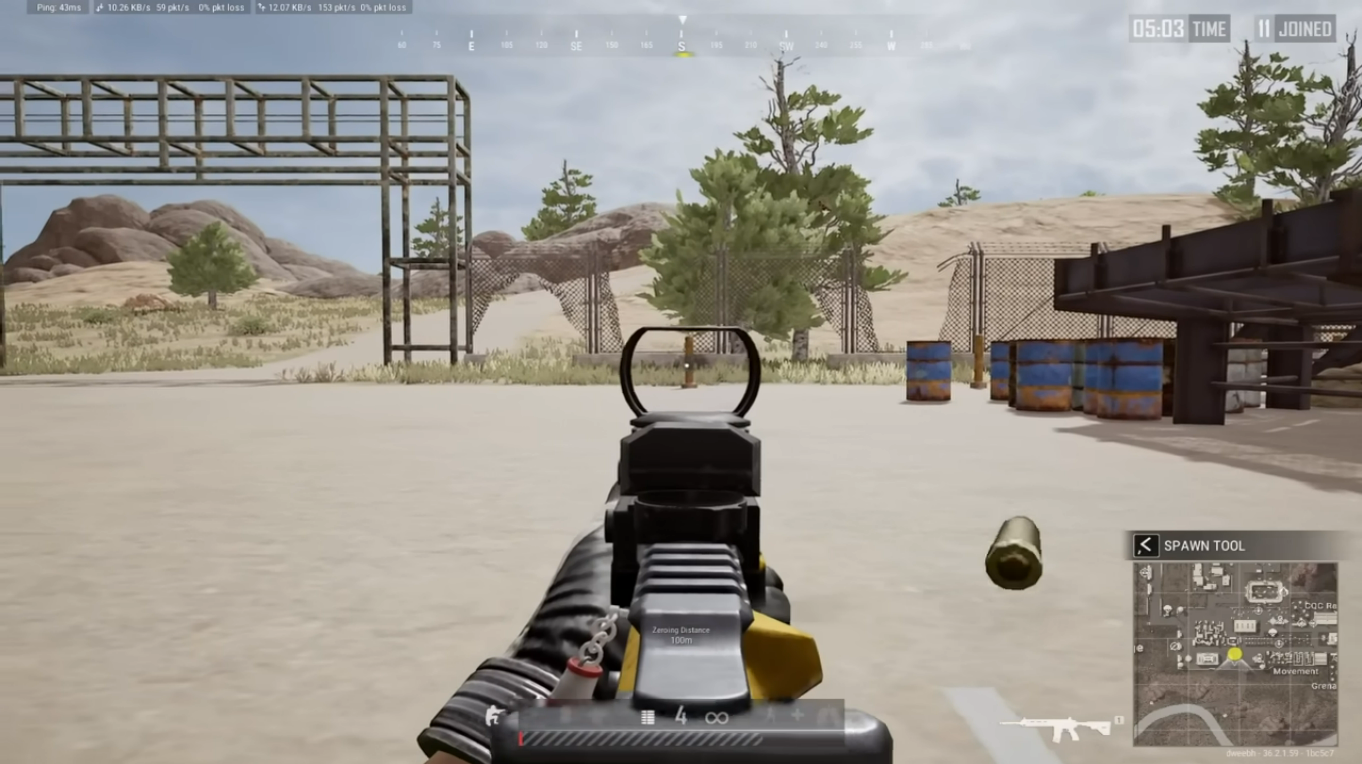
One training routine that has genuinely helped me is shooting poles in the training grounds. It sounds silly, but as you shoot, try to keep your dot on the pole as best you can. If your red dot starts veering left, pull slightly right, and vice versa. I'd recommend doing this in longer sprays first, then transitioning to shorter bursts, which will feel much easier afterward. The whole point is to train your brain to react naturally to the horizontal randomness and feel more in sync with your gun of choice.
2. Leaning Into Your Sprays (the easier way)
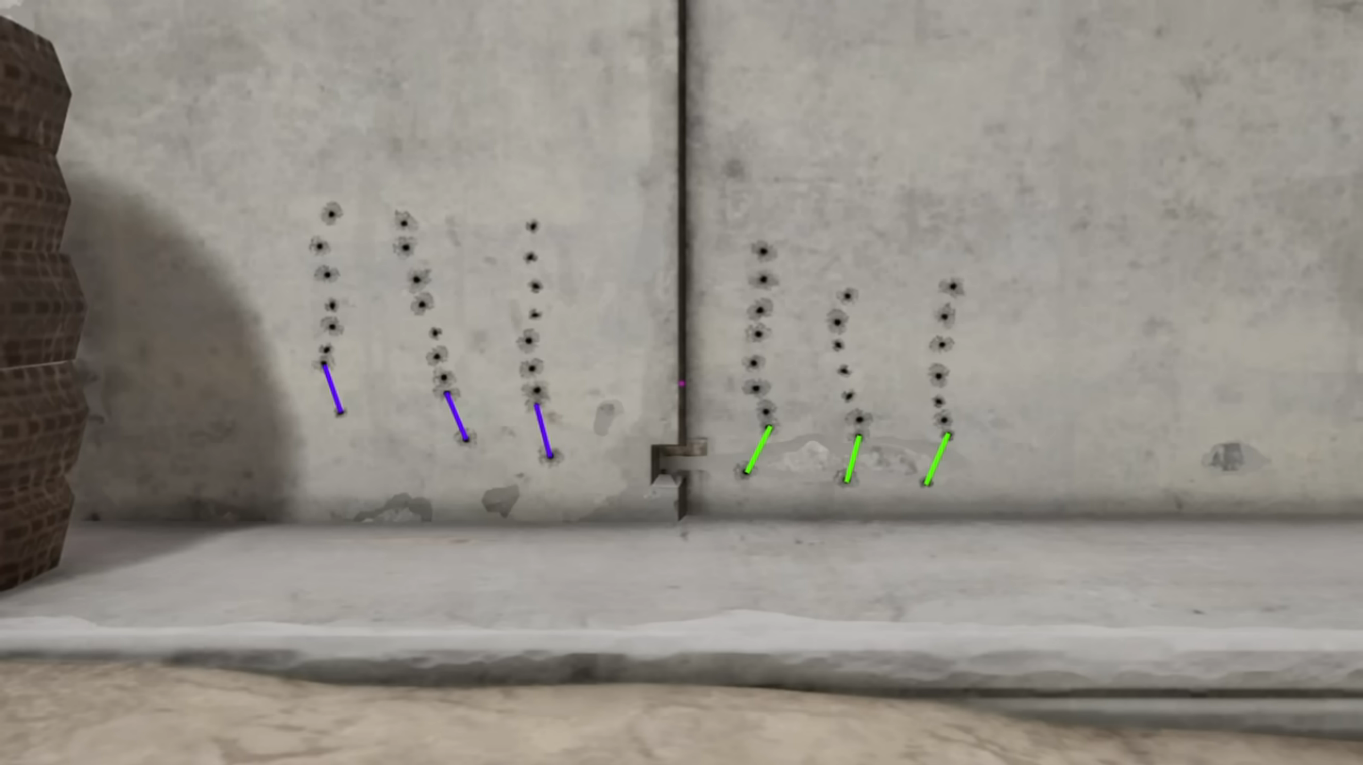
The second and much easier way to combat horizontal recoil is by leaning into your sprays. If you see your recoil veering off to one side, lean in the opposite direction. This lets you recenter your reticle without making any adjustment to your mouse at all.
Keep in mind that leaning really only affects recoil within the first two shots, which take off in a diagonal direction depending on which side you're leaning toward. After that, the rest of the spray behaves exactly the same as it would while crouching or standing.
Practice Drills for Recoil Control
A few additional tips and drills for perfecting recoil control with ARs.
Bursts for Close-Quarters Engagements
Practice shooting targets in short, controlled bursts, focusing on initial shot accuracy and keeping your spray as tight as possible. Because time-to-kill is so short in this game and you can take someone out in only three to four shots, that initial burst in a close-quarters fight is critical.
There are a ton of in-game resources in the training grounds for this. There are spots all over where you can practice peeking and shooting bursts on something as simple as a mannequin or any random player standing around. Focus on reticle placement and making sure your first couple of bullets are always on point. You should be ADSing, shooting a couple of bullets, pulling off, moving a little, then repeating.
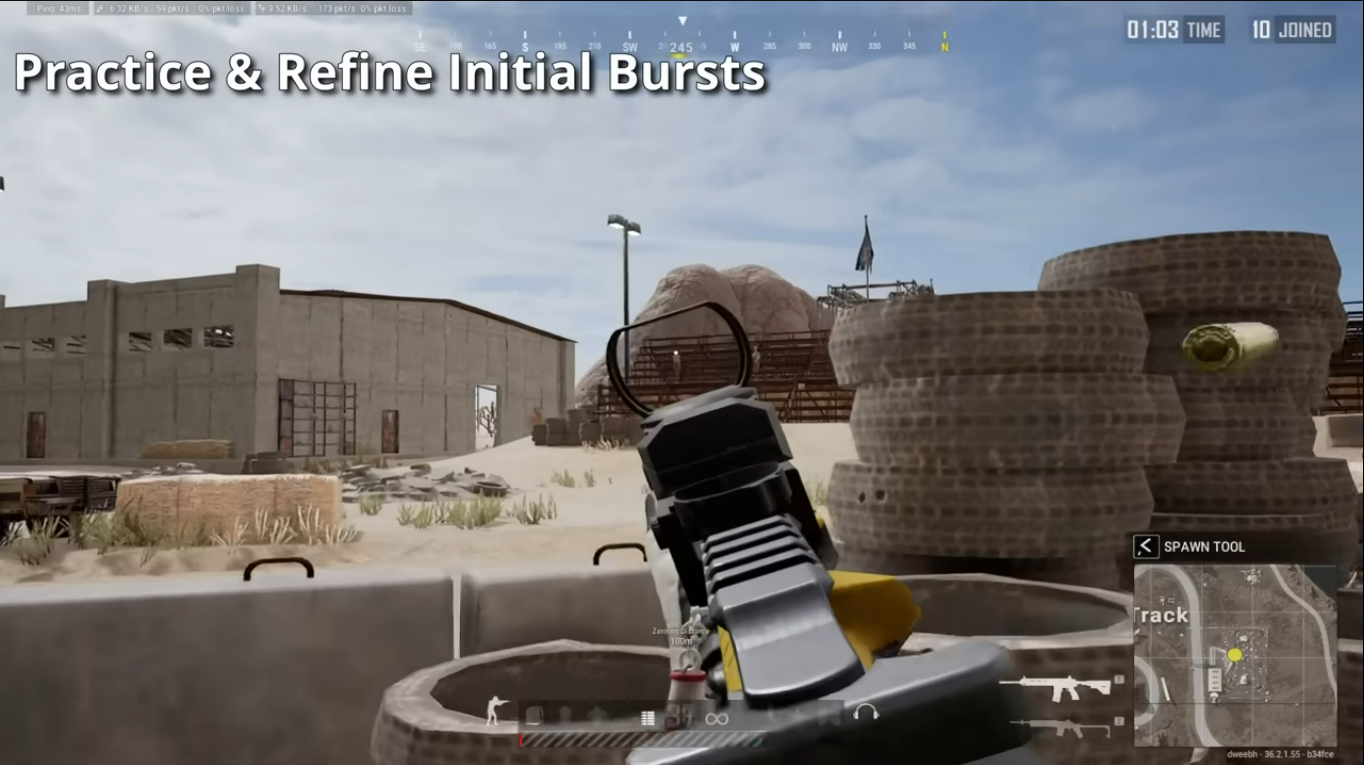
If you've watched any of my previous videos or live streams, you'll know Aim Lab is by far my favorite training tool in PUBG. It's the perfect place to practice initial shot and burst accuracy, and you really should spend around 5 to 10 minutes in here before every time you play. To get to Aim Lab, open your map with M while in the training grounds and either select Aim Lab on the left-hand side, or click the oil tanker toward the north side of the map.
Long Sprays and Wall Sprays
I've had comments dismissing the need for longer sprays because of how inefficient they can be, but I still think they're very important to practice. When shooting someone out of a car or a glider, it usually isn't done in a short controlled burst but rather a longer, sustained spray. There are also times when you have to take someone out quickly, don't have time to switch to a DMR or sniper, and end up lobbing bullets downfield hoping for the knock.
One of the best ways to practice long sprays is with wall sprays. Head into the training grounds, go to any of the car depots with the tall vaulted walls, find one of the cement cross-sections, and just spray it over and over. The goal is to keep your reticle and spray as centered on that cross-section as possible, which also doubles as great practice for micro-adjustments and keeping horizontal recoil in check.
I'd suggest doing wall sprays with a range of attachment setups: muzzle brake, flash hider, different grips, and also no attachments at all. There will be plenty of situations where you don't have your preferred loadout, so practicing with your favorite two or three ARs across different attachment combinations really readies you for anything.
Standing-to-Crouch and Sprint-to-Fire
Because of the obvious recoil benefits of crouching, practicing the transition from standing to crouch when engaging is critical. An easy way to drill this is similar to wall sprays: walk up to a wall, place a spray on it, then go from standing to crouch to shoot, stand back up, and repeat. You can also take this to the 200 meter range to practice on moving targets, since not every player you face will be standing still.
I'd also work in some sprint-to-fire exercises, especially because there's a noticeable ADS delay when going from sprint to crouch. Your character has to bring the gun from the waist up to the shoulder, which can be disorienting when you're trying to shoot on the move.
Scope Sprays
Scope sprays are one of the most rewarding skills you can learn with an AR in PUBG. That additional zoom gives you a larger player model to aim at compared to a red dot, making it easier to hit your shots, if you can handle the additional screen shake and added scope animation.
While it may seem like spraying with scopes has more recoil, they actually have the same level of recoil when compared side by side to a red dot. What makes a bigger scope so difficult is the added screen shake and scope tilt while spraying, which means the center reticle will always sit a little higher than it does with a red dot.
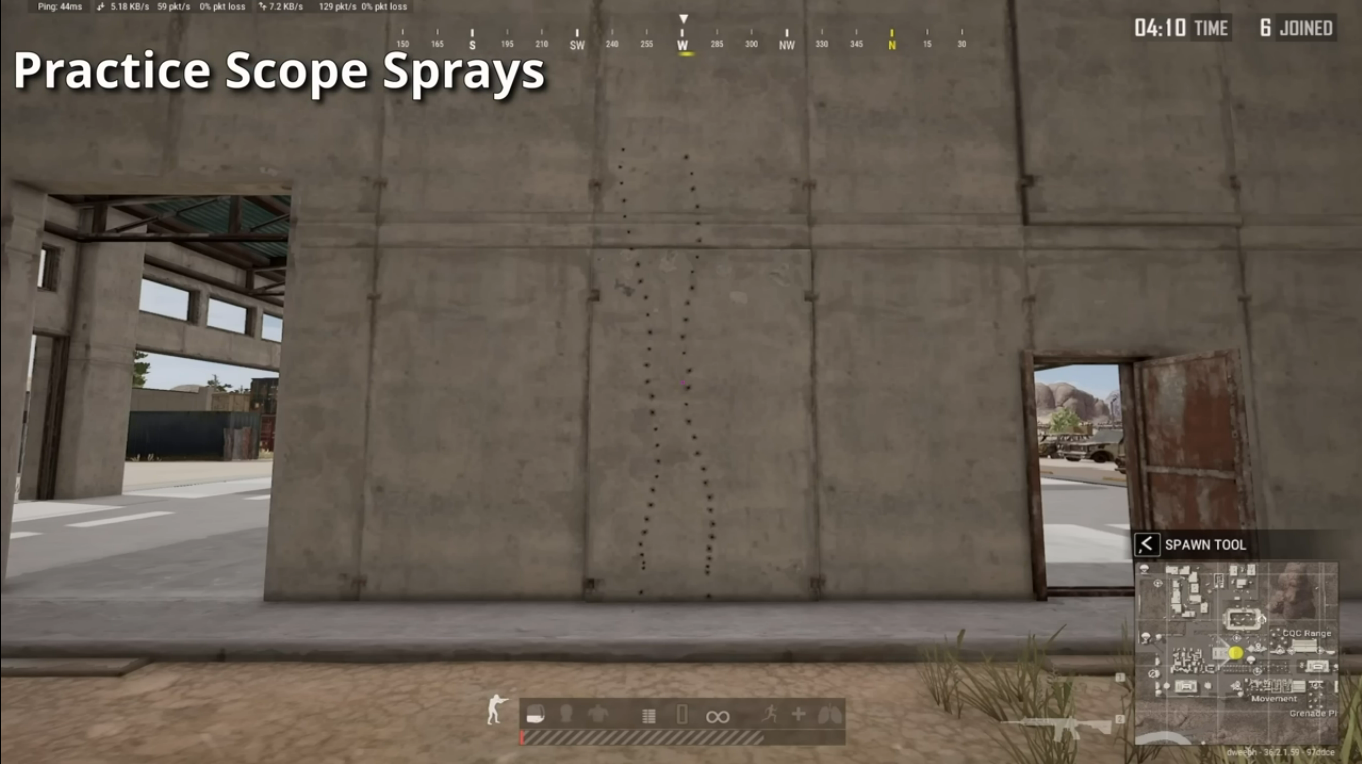
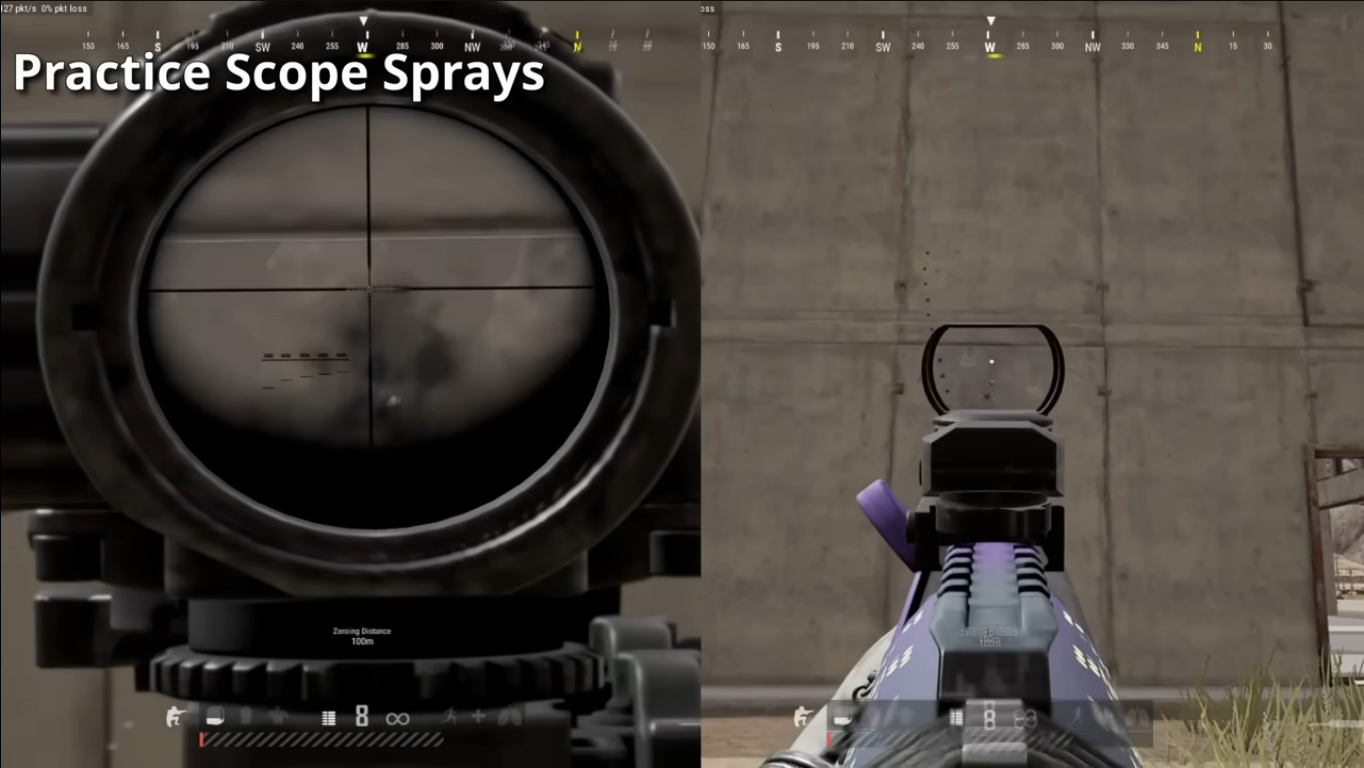
To practice scope sprays, use all the previous tips in this guide and apply them here. Practice initial shot recovery, wall sprays, and horizontal micro-corrections until you feel comfortable using a 3x or higher. When you feel confident, jump into a TDM using only a 3x or 4x scope on your preferred AR and practice until your arms are sore.